


 AI
Development

 Shopify
 Magento Open Source
 Adobe Commerce
 WordPress
 B2B Excellence


What a Long-Term Software Development Partner Looks Like (6+ Years with Our Clients)


 Last updated on 11 Nov 2026
 LinkedIn
 Twitter
 Facebook

 Summarise this blog
 Summarise
Most software projects don’t fail because of code. They fail because of misalignment, short-term thinking, and no clear ownership. As your business develops, your needs might be broader and demand scalability and continuously improving systems that a genuine software development partner can offer.
Six years is a long time in software. Your platforms might change, and the business process might not stay the same as it was in the beginning. So, for businesses considering software development outsourcing, this approach matters. The right partner gives you continuity without leaving you behind on new technology. At RVS Media, we’ve worked with several clients for more than six years, supporting them as their platforms, teams and business goals changed. Here’s what those partnerships have taught us about what a long-term development partner should offer and how to choose one.
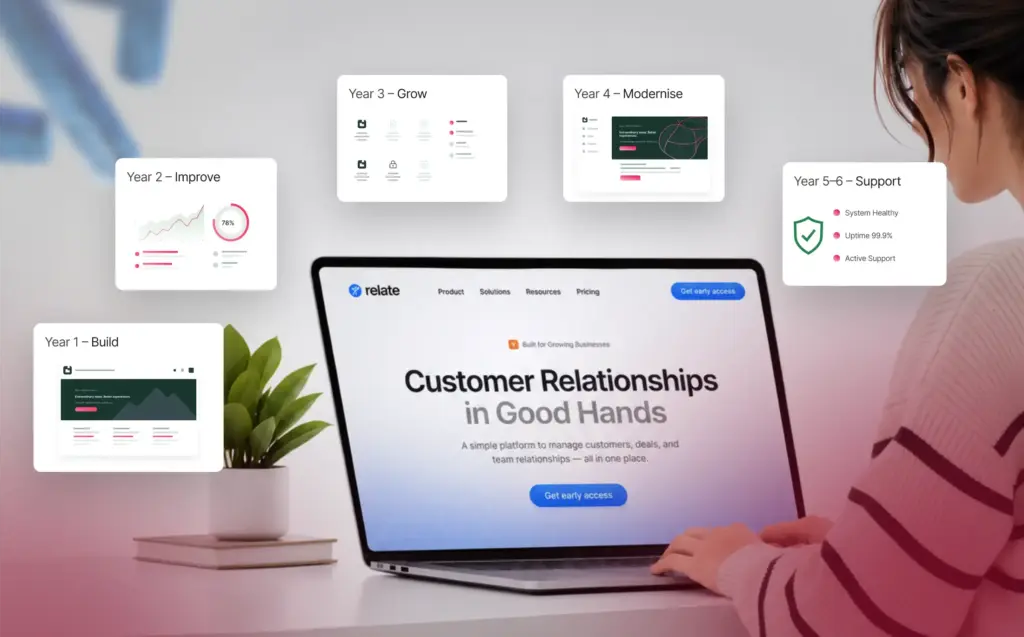
What Does a Long-Term Software Development Partnership Actually Mean?
The global custom software development market size is expected to reach USD 33.49 billion by 2034 (source). Further, IT spending on software is expected to increase by 9.8% in 2026. This makes choosing the right long-term partner more important than ever. A short-term project usually comes with a clear beginning, scope and delivery point. A long-term software development partner remains involved as new requirements come.
The work might go from building new functionality to fixing technical issues, improving performance, modernising older elements or supporting new business processes. Choosing a software development partner for long-term goals means they understand how your systems work and why certain decisions were made for your business. Further, you don’t need to spend much time explaining the same background every time a new requirement appears.
1. They Build Deep Domain Expertise
Businesses generally work on multiple projects and you might understand the pressure behind ongoing development. Here, a professional software development partner can offer you the assistance you are looking for. They follow market trends and make sure to meet all regulatory requirements. This approach can help your company stay away from unnecessary complications.
2. They Adapt to Your Changing Strategic Goals
Market conditions have been changing continuously over the years. This can help your company adopt new opportunities to prove its excellence in the market. A software development partner can help your team be a part of strategic conversations. You can be confident about your future requirements while getting proper solutions to your challenges.
3. They Communicate Clearly and Consistently
Working in a company requires you to be acquainted with multiple communication styles along with proper decision-making approaches. With better collaboration, you can easily get rid of risks. Confusing communication can disturb your potential to offer client satisfaction as well. With proper experts, you can be assured of better communication that builds real trust.
4. They Spot Problems Before You Do
A long-term software development partner can identify challenges and opportunities before the client even points them out. They can suggest feature improvements and technology upgrades along with architectural refinement right from the execution to deployment.
How to Choose a Software Development Partner for Long-Term Goals?
When it comes to how to choose a software development partner, many businesses struggle to know what to assess. Here are the factors that matter most.
Check their Technical Expertise
Instead of asking what technologies you use, you need to ask, ‘what kind of systems have you built recently’ and ‘what challenges did those systems face as they grew?’
Review Their Portfolio
If you are looking for an agile software development partner, you need to check if they have been consistent with your product types. They should assess all the problems instead of jumping directly to the solutions.
Check How Clearly They Communicate
A good long-term partner is clear about scope, cost and timelines. You should check if they are clear with their proposals and if they answer queries directly. When your business asks, they should be clear with their proposals while offering you the right solutions to all the queries.
Flexibility is the Key to Success
A flexible team can scale up when timelines tighten and adjust priorities without any risks. So, your software development partner should offer you flexibility when the product grows faster than expected.
These are the reliable steps you need to consider if you are evaluating how to choose a software development partner.
When Does Your Business Need a Long-Term Software Partner?
If your business relies on software development to deliver value and keep you a step ahead of the competition, relying on random development can put you at risk. On the other hand, businesses which are dependent on scaling up with growth, automation and digital transitions need to look for long term software partner who can take ownership of the project. Any partner you consider should understand your requirements and project details fully.
You might think an outsourcing partner is expensive at the initial stage, but they overall reduce the total cost of ownership by preventing you from repeated rewrites and quality problems.
Further, companies without clear software development cost visibility experience an average budget of 27%, with complicated projects exceeding budgets by 50% or more. A professional custom software development partner knows your system and delivers faster.
Common Mistakes When Choosing a Software Development Partner
Now you are aware of how to choose the right software development partner. Let us further dive into the mistakes you must avoid.
If you choose partners on hourly rates, it can give rise to long-term expenses because of continuous inefficiencies. You must consider the assistance of a software development outsourcing partner to detect the expenses.
Another mistake is unclear ownership. A good outsource software development partner can define responsibilities, success metrics and decision authority.
What Should a Six-Year Partnership Give You?
The biggest benefit you can expect from a long-term software development partner is that they get to understand the core operations of your business. This enables them to identify internal problems more quickly and provide solutions without creating unnecessary complications. They should also be able to question decisions when required and help you find better solutions that create greater business value.
The real test is whether your partner can provide the right strategies to support your business decisions. At RVS Media, we have seen the value of long-term partnerships through our work with businesses such as Owen Brothers Catering and the Travel Force.
Our relationship with Owen Brothers Catering has lasted more than Six years. During this time, we have supported their digital growth through SEO, website development, and ongoing improvements. As their business evolved, their website also needed to evolve. We helped create a more modern and user-friendly platform while protecting the SEO value they had already built.
We have also worked with Travel Force on a major website of transformation, focusing on user experience, performance, and SEO. The new website helped increase quote submissions by 75%, calls by 150%, and website traffic by 150%, while reducing the bounce rate by 30%.
These partnerships show that long-term software development is not simply about delivering a project and moving on. It is about understanding a client’s business over time, adapting to changing requirements, and continuing to provide ongoing maintenance and support as the business grows.
Conclusion
A 6-year software relationship is built through complete consistency. The technologies change and your requirements might also evolve, but the partnership should continue to offer you better technical approaches while supporting your decisions.
Choose based on portfolio, communication and total cost, not hourly rate. Thinking about a long-term partner for your platform? Talk to RVS Media’s development team.
FAQs About Long-Term Software Development Partners
Start by being clear about what you need. Look at how clearly they explain the process and how transparent they are about their timelines and costs. Also, ask them if they have handled similar projects like yours. A strong partner can simplify technical decisions instead of making the terms complicated for you. Clarity matters more than deep technical knowledge.
Reliability mainly reflects patterns. Look out for long-term client relationships, clear communication, detailed case studies, etc. A reliable partner identifies risks early and sets realistic expectations.
The costs differ as per the complexity, team size, location, etc. Simple applications will cost far less than a large, scalable platform. So, instead of focusing on hourly rates, assess their overall cost, including the type of quality they provide. You can also verify their speed and long-term maintainability.
It depends on the scope and goal of your requirements. A basic product might take a few months, while a more complicated system can take longer. The software development process timeline usually includes planning, design, development, testing, and deployment.


