
 AI
Development
AI
Development
 Shopify
 Magento Open Source
 Adobe Commerce
 WordPress
 B2B Excellence





Low-Code/No-Code: The Future of Rapid & Cost-Effective Web Development


In a boardroom, after the laptops had shut off and the spreadsheets were gone, a question stayed in the room. What if making digital experiences did not mean waiting for months or weeks? What if ideas could happen as fast as someone thinks of them? That question is now what drives the Future of No code. It is changing how people in business make, launch, and grow digital solutions.
Introduction: Looking at Development in a Fast-Moving Digital World
The Growing Demand for Faster Digital Solutions
Businesses today face pressure to improve their digital experiences through faster delivery times and better service. People want things done in less time and done well. People need to work in modern ways because existing methods require excessive time to complete their tasks. The process creates a gap between the initial concept and the final delivery of completed work.
The Rise of Low-Code and No-Code Platforms
The development of online products has changed because of low-code and no-code platforms. The platforms enable users to create applications and websites within a short time even if they lack coding skills. The platforms function as tools yet they transform the entire process of creating digital products.
Understanding Low-Code and No-Code Development
What is Low-Code Development?
Low-code platforms enable developers to create applications using basic tools that display current system status and prebuilt components which require minimal programming. The developers can create applications at a faster pace while maintaining control over their desired modifications.
What is No-Code Development?
No-code platforms eliminate the requirement for programming work. People who lack technical expertise can use these platforms to create applications. Users can create their projects through drag-and-drop functionality and straightforward user interface.
Key Differences Between Low-Code and No-Code
Low-code platforms enable developers to complete tasks more efficiently within shorter time periods. No-code platforms empower business users to create their own tools which they require without any delay.
The Evolution of Web Development Practices
From Manual Coding to Visual Development
Web development has moved from hard coding to tools that use parts and easy-to-see systems. This change makes it easy to create websites and apps.
The Shift Toward Agile and Iterative Development
Modern businesses need fast changes, real-time updates, and ongoing improvements. These things work well with no-code methods.
Why the Future of No Code is Gaining Momentum
Increasing Demand for Faster Time-to-Market
Business competition requires companies to launch their products at high speed to maintain market leadership. The current work environment requires employees to complete their tasks with increased speed.
Addressing the Global Developer Shortage
There are not enough skilled developers, so companies now look for ways to lower their need for tech experts.
Cost Optimisation and Budget Efficiency
No-code platforms help to bring down the cost for building and taking care of software. This is good for any business, big or small.
Core Features of Low-Code/No-Code Platforms
Drag-and-Drop Interfaces for Easy Design
Visual builders make it easy for people to build UI/UX. You can design applications with them and do not need to know coding.
Pre-Built Templates and Components
These ready-to-use templates help you get started fast. They make it easy to keep your work the same across all projects.
Seamless API and Third-Party Integrations
Integration features help businesses connect the applications to the tools and systems they already use. You can do this easily.
Workflow Automation and Process Optimisation
The automation tools present in the system boost work efficiency. The system reduces your manual work requirements through its automation features. The system delivers advantages to all users through its various operational enhancements.
Key Benefits of No Code
Faster Development Cycles
Reduced Development Costs
Enhanced Collaboration Across Teams
Scalability and Flexibility
Faster Development Cycles
You can build and launch applications in days, not months. This helps cut down the time it takes to get to market by a lot.
Reduced Development Costs
Lower need for large teams brings big cost savings.
Enhanced Collaboration Across Teams
Business and technical teams need to use better communication methods so they can work more effectively together. The improved communication between teams leads to better results which they achieve through their collaborative efforts.
Scalability and Flexibility
No-code platforms help businesses grow their apps without having to build everything again from the start.
Cost Savings: Build More and Spend Less
Minimising Resource Dependency
No-code platforms enable businesses to achieve greater outcomes without requiring a large team of specialists. The method allows a complete team to accomplish their tasks using fewer members.
Lower Infrastructure and Maintenance Costs
Cloud-based benefits include the potential alone feel-annoying to pay a great sum for equipment acquired. And that does not even consider the ongoing support and repairs!
Achieving Faster Return on Investment
Quick deployment leads to faster revenue and better ROI.
Speed to Market: Launching Solutions Faster
Rapid Prototyping and Testing
Businesses can make a sample fast. They can try out ideas and fix them by using feedback.
Real-Time Updates and Iterations
No-code platforms let you make fast updates. This helps apps stay up to date and useful. They can also stand out in the market.
Empowering Citizen Developers
Who Are Citizen Developers?
People who do not have tech skills start developing applications with no-code tools; consequently, these solutions may be used to address specific business issues.
Bridging the Gap Between Business and Technology
No-code platforms enable workers to create actual solutions from their work-related ideas. The workers can achieve this goal because they do not need to depend on IT staff support.
Low-Code/No-Code vs Traditional Development
Speed and Efficiency Comparison
No-code platforms help people build things faster than using old ways of coding.
Cost and Resource Allocation
The usual way to do development needs more resources. No-code, on the other hand, helps cut down on costs.
Customisation and Scalability
While regular development lets you change a lot, no-code gives enough choices for most businesses.
Need Reliable Web Development partner to help grow your Business?
Our Experts Can Help!
Industry Use Cases of No-Code Platforms
Ecommerce and Online Stores
The businesses can build and run online stores fast. This helps to make the customer experience better.
Healthcare and Patient Management Systems
No-code tools help to make work easier and help people get better care.
Financial Services and Automation
Automation tools help make work faster and help people follow rules in money work.
Education and E-Learning Platforms
Schools and colleges can make fun and hands-on places to learn without any trouble.
The Role of AI in the Future of No Code
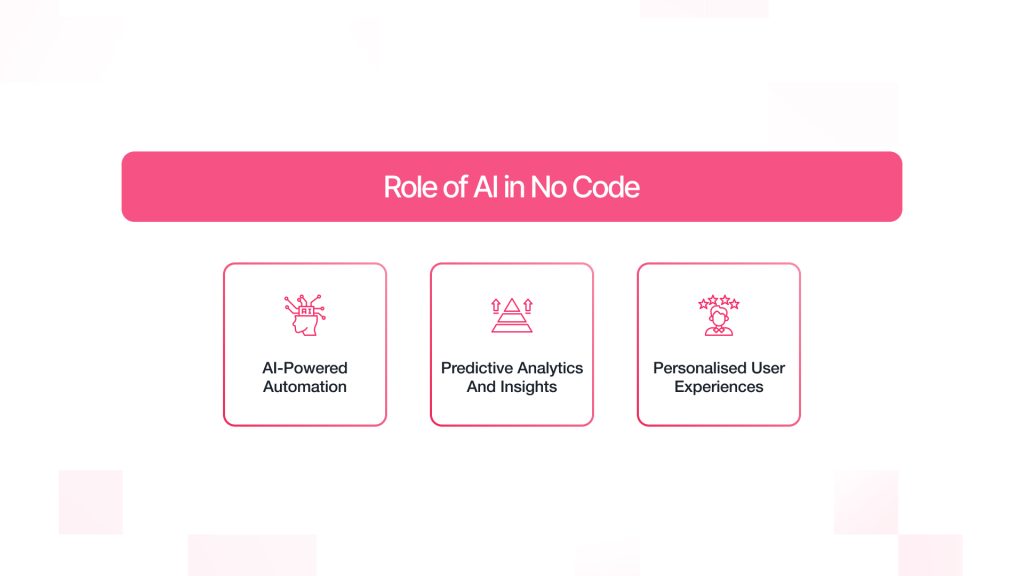
AI-Powered Automation
Artificial intelligence helps with doing work without humans. It lowers the need for people to step in and helps things get done faster.
Predictive Analytics and Insights
AI helps people make choices by using data. This can make a business do better.
Personalised User Experiences
Smart ideas and screens that change help people get more interested.
Integration Capabilities and Digital Connectivity
API Integration with Enterprise Systems
No-code platforms function effectively with business tools that most people use. The system enables you to establish connections between your various tools in a quick manner.
Cloud-Based Scalability and Data Synchronisation
Cloud compatibility lets you get your data right away. It also helps your data grow as you need it.
Security and Compliance in No-Code Development
Data Protection and Encryption
Modern platforms use strong security steps to keep important data safe.
Compliance with Industry Standards
No-code solutions follow global rules. This helps to make sure there is trust and people can count on them.
Making Changes and Adjustments in No-Code Platforms
Extending Beyond Templates
Users can change the applications to fit their own business needs.
Hybrid Development Approaches
Bringing no-code tools and old ways of coding together can give people more ways to work and add more things they can do.
Challenges and Limitations
Vendor Lock-In Risks
Relying on just one platform can take away some options in the long run.
Limited Capability for Complex Applications
Very big and detailed systems may still need old ways of development.
Performance Considerations
Big apps can face problems with speed on some platforms.
The Future of Web Development with No Code
Market Growth and Adoption Trends
More and more people and companies in different fields are now using no-code platforms.
Evolution of Development Roles
Developers have a bigger role now. They do more than just basic work. The job is to help plan and solve tough problems.
Choosing the Right No-Code Platform
Key Features to Evaluate
Businesses should look at how the platform can grow, what tools it works with, and how easy it is to use before they pick one.
Making Sure Platform Tools Match Business Goals
Picking the right tool helps you do well in the long run and get things done faster.
Best Practices for Implementing No-Code Solutions
Defining Clear Objectives and Scope
A clear plan is needed to make sure things work out well.
Establishing Governance and Control
Good oversight helps with security. It also makes sure rules are followed. You can get things done well, too.
Training Teams for Effective Usage
Teaching people how to use no-code tools helps them get the most from it.
Making the most of No Code for business growth
Driving Innovation Without Heavy Investment
No-code lets businesses try new things without spending too much money. It helps them find better ways to work.
Enhancing Operational Efficiency
When you use automation and smooth workflows, you get more work done.
Scaling Digital Transformation Initiatives
Businesses can grow their digital skills with little effort.
Looking for a Partner in Your Digital Transformation Journey?
We Can Help!
The Role of Agencies in No-Code Development
Strategic Guidance and Expertise
Agencies help people and businesses pick the best solutions and use them.
Optimising Design and Performance
Having experts on your team helps you get apps that are good and can grow with your needs.
Real-World Success Stories
Startups Achieving Rapid Growth
No-code platforms help startups get started fast. They also make it easy for them to grow.
Enterprises Streamlining Operations
Large companies are using no-code tools to do work better. This helps them save time and money.
Democratisation of Technology Through No-Code
Making Development Accessible to Everyone
No-code breaks down roadblocks with tech, so anyone can make apps.
Encouraging Innovation Across Organisations
People at every level can help with digital change.
Conclusion: Embracing the Future of No Code
A New Era of Agile Development
The future of no code is about new ways to work. Things will be quicker, work will be better, and more people will get the chance to build things.
Unlocking Innovation and Growth
Businesses that use no-code can stay updated with change. They can even be the leaders when things shift. No-code helps people turn their ideas into real things, fast and with great care.